
For the third consecutive year, the world-renowned Swiss watch manufacturer will be using its timing skills on the glistening mountain slopes, namely as the official timekeeper for the 2008-2009 Alpine Skiing World Cup competitions organised by the International Skiing Federation (FIS).
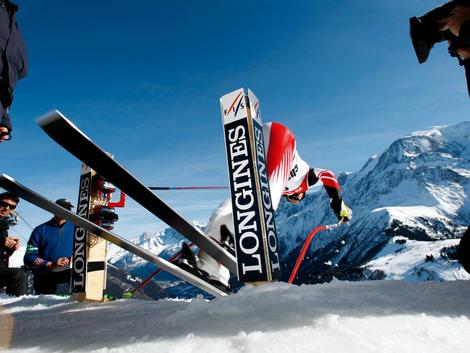
The start of the 2008-2009 skiing season also marks the return of the world champion downhill skier Aksel Lund Svindal from Norway. Aksel has been one of Longines' ambassadors of elegance since 2007 and was unfortunately injured in Beaver Creek the same year. The prodigy from the far north is back on form and will be competing again this winter. Longines is proud to be the timekeeper for the first World Cup race in Levi and would like to take this opportunity to wish him every success during the season.
Longines is looking forward to its partnership with the FIS for the coming ski season because, like the competitors themselves, Longines sees each race as a challenge to be faced in a constant and thrilling effort to achieve a faultless, perfect performance.
Longines' history is closely linked to that of sports timing. Skiing requires strength, technique and precision, which reflects the demands and accuracy of the craft of watchmaking.
It was way back in 1933, in Chamonix that Longines first worked on the impressive ski pistes. Since then, winter competitions have been an opportunity for the brand to showcase its skills, thanks to the many technological inventions that have come out of the Longines workshops: the photoelectric cell light-beam (1945), the first luminous results board (1962), measurement of the competitors' times to one thousandth of a second (1964), automatic recording at 100 images per second with integrated individual times (1971), measurement of competitors' times to one ten thousandth of a second (1973), superimposing "Longines Timing" on television screens (1975), to mention but a few!
Each era has brought with it new demands; the difficulties encountered in sports timing have changed massively. For the men's downhill, for example, 5 intermediate times and 2 speed checks are now required by the FIS as well as the final result. And this means precision to one hundredth of a second!
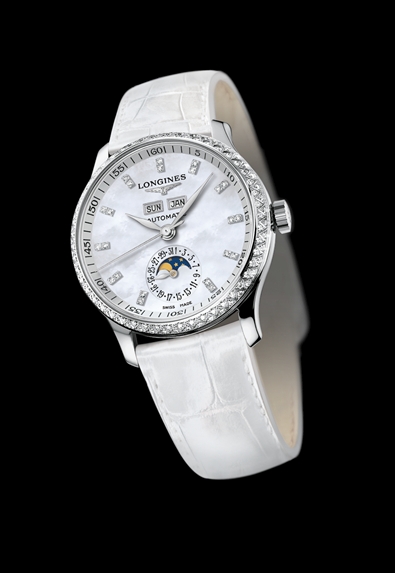
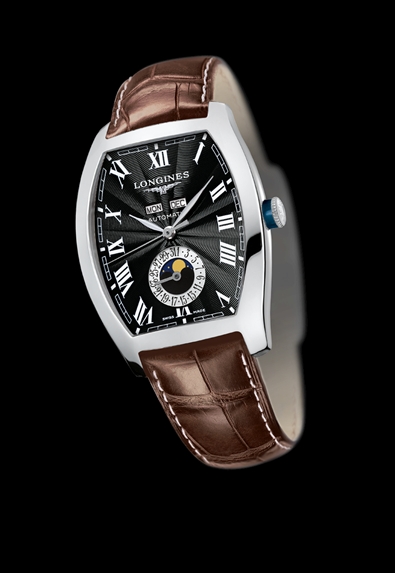
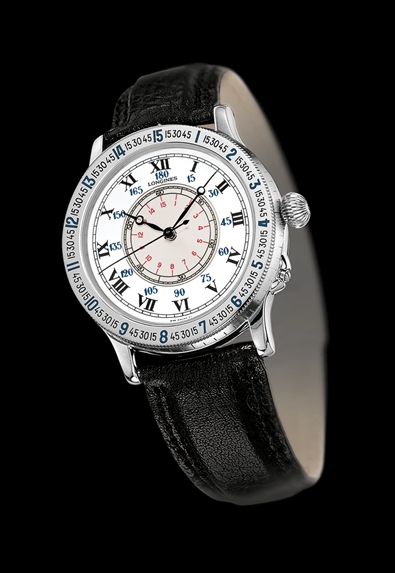
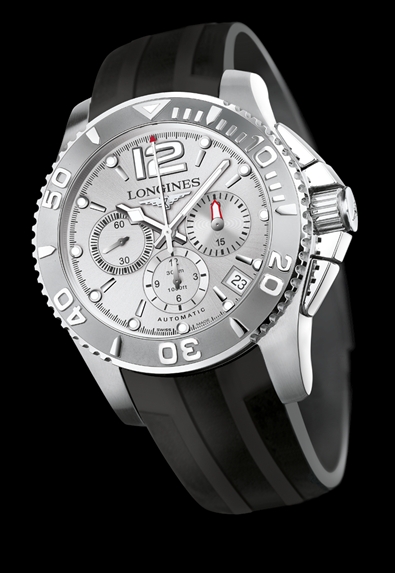
Longines collections
Latest News from Longines
Longines Heritage Classic
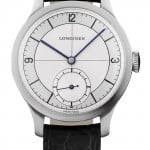
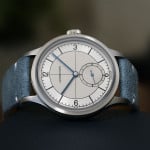


Longines adds to its Heritage collection, which explores and revisits a historical legacy of the brand. The latest Heritage model – The Longines Heritage Classic – in inspired by a timepiece from the 1934, which is strongly distinguished by the streamlined aesthetics of its sector dial. This is a beautiful and simple time-only watch and a truly successful reinterpretation of the vintage piece that inspired it.Longines Heritage Classic the Original from 1934 The spirit of the 1930s is particularly revealed in the simplified design of the dial,...
Longines Conquest Chronograph by Mikaela Shiffrin
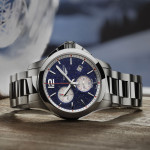

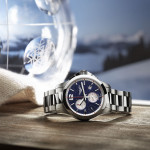


Ahead of the winter season, Longines adds to its famous Conquest collection of sporty watches designed in an eternal pursuit of performance. The new creation is a high performance chronograph inspired and co-designed by the Alpine Ski Champion Mikaela Shiffrin. This exclusive timepiece personalized by Shiffrin, who is also Longines’ Ambassador of Elegance, features a delicate blue aventurine dial that shimmers in light evoking the glitter of snow crystals. The blue of the dial is contrasted by lively red highlights, honoring the American flag a...
The Longines Heritage Skin Diver Watch
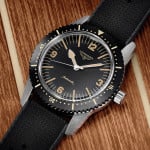
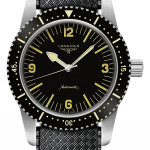
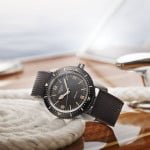


In the search for inspiration, the house of Longines regularly revisits its historic collection, which serves as a basis for the creation of many new models, and in particular those of the Heritage collection. Today, the brand unveils the latest of its vintage-inspired timepieces, the Longines Heritage Skin Diver Watch. The Skin Diver is not your regular old-school diving watch, it is a piece inspired by Longines’ first ever diver, a 1956 timepiece named Nautilus Skin Diver. The iconic diver, that was introduced at a time when water sports w...
The Longines Heritage Military Watch
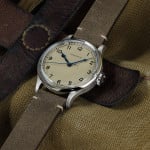
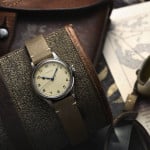
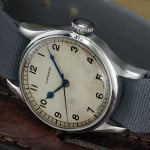


Swiss watchmaker Longines pays tribute to its historical roots with a new member of the Heritage watch family. The Longines Heritage Military, which was first unveiled at this year’s Baselworld, is a watch inspired by a 1940’s Longines model that was originally designed for the British Royal Air Force. Housed in a round stainless steel case with a large pilot's style crown, the Military Watch features a beige-toned vintage-looking dial that has been hand sprayed with tiny black droplets reproduce the patina of the original. Not only this makes...
Longines Conquest V.H.P. GMT Flash Setting





Longines extends its expertise in quartz movements to a GMT realm. Back in 2017, the brand reintroduced its VHP (Very High Precision) series, which was originally introduced in 1984, as an answer to the great Quartz Crisis. The VHP movement emphasized on precision with accuracy to fractions of a second per month and ± 10 second per year. With the rebound of mechanical watches, the VHP series was discontinued only to return for the last year’s BaselWorld. The almost forgotten range, now reintroduced as a high-end take on quartz, made a huge come...
Longines unveils two exclusive Conquest V.H.P. models for Stefanie Graf and Andre Agassi
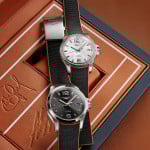

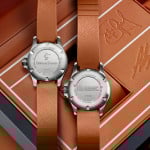


The house of Longines celebrates ten years of its partnership with tennis legends Stefanie Graf and Andre Agassi. The distinguished Charity Gala Dinner, to mark the friendly anniversary, was held on June 2,. During the event, Longines officially launched an auction of exclusive “Conquest V.H.P. Stefanie Graf & Andre Agassi Foundations” timepieces, with the proceeds going to charities Children for Tomorrow and The Andre Agassi Foundation for Education, two charities founded by the Longines ambassadors. Longines created a special watch, number...
Longines Legend Diver for BaselWorld 2018
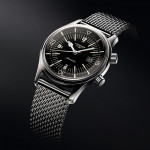
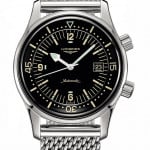
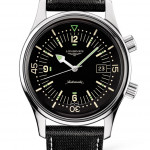


For BaselWorld 2018, Longines extends its Heritage watch family with the Longines Legend Diver Watch, which now comes with a vintage steel bracelet. This interesting divers’ watch, the reissue of a diving watch from 1960, is a comfortably-sized, sporty new model that combines high performance and timeless elegance. The latest addition to the Heritage range celebrates the 10th anniversary of this reissue by offering a new version with a Milanese mesh bracelet. The design of the original watch, including its domed crystal, is retained to prese...
Longines Conquest V.H.P. Gold Coast 2018 Commonwealth Games Edition


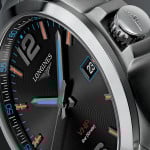


The house of Longines, which is the Official Partner and Timekeeper of the XXI Commonwealth Games, has just announced the launch of the special Conquest V.H.P. Gold Coast 2018 Commonwealth Game Edition. The new member of the Conquest V.H.P. watch family is envisioned as a tribute to the international multi-sport event involving athletes from the Commonwealth of Nations. Earlier this year, on the occasion of the BaselWorld trade show, Longines opened a new chapter in watchmaking history by introducing the Conquest V.H.P (Very High Precision)...
Longines Avigation BigEye
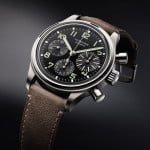
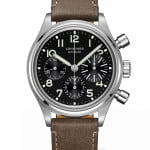


The house of Longines adds yet another interesting timepiece to its Heritage collection. The new Avigation BigEye chronograph keeps with the great tradition of pilot watches, featuring a design strongly influenced by the 1930’s. The model features aesthetic cues borrowed a number of vintage aviation instruments, even though it is mostly inspired by a particular pilot’s watch that now rests in the Longines Museum. The round stainless steel case, measuring 41mm in diameter, features a classic domed sapphire crystal coated in multiple layers of...
The Longines Master Collection: new colored dials
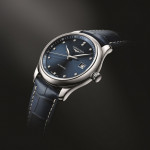
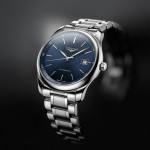
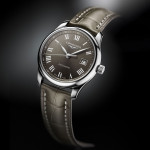


The Longines Master Collection, launched back in 2005, is built on tradition, elegance and performance. This product range is the perfect contemporary illustration of Longines long-standing values. It blends classical elegance with the cutting-edge performance, and stands as an emblem of the brand's watchmaking savoir-faire. In 2017, Longines adds new pieces to its best selling product range: the new Longines Master timepieces with colored dials. Longines introduces two Master editions: one in grey and other in blue, both perfectly in-line w...
