
An exhibition of the exceptional watchmaking heritage of the Manufacture, from June 24th to August 14th 2011, at the National Museum of Singapore.
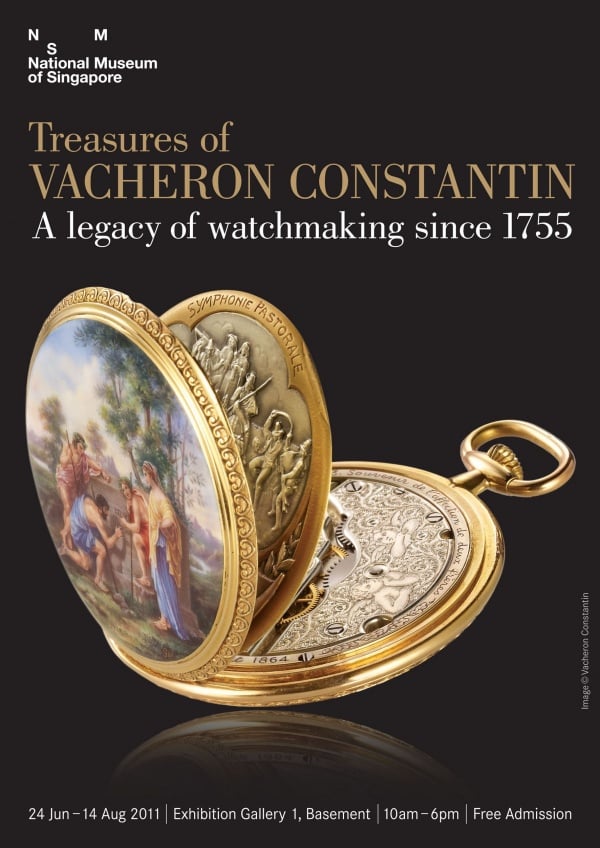
The upcoming exhibition is the first major public exhibition of the heritage of the world’s oldest watch manufacturer, Vacheron Constantin. The exhibition will showcase the legacy of watchmaking since 1755, and reveal the details about more than 250 years of ingenuity and savoir faire. Visitors are invited to an exceptional journey circling around the spirit of the artisans cabinotiers of the 18th century and exploring three aspects that strongly define the history of Vacheron Constantin: the evolution of the time telling, of its crafts and artistic influences.
The exciting exhibition promises traveling back in time via 180 exceptional pieces from the heritage of the Manufacture. The 600 sq m of exhibition space will also reveal archived documents, workbenches of the artisans cabinotiers, watchmaking tools, and machines invented in the Manufacture’s long history.

The pearl of the exhibition, and its central piece, is the pocket watch Les Bergers of Arcadia created in 1923. Les Bergers d'Arcadie are pastoral paintings depicting idealized shepherds from classical antiquity, clustering around an austere tomb. The pocket watch reveals a motif from a painting by Nicolas Poussin (1594–1665). This painting, oil on canvas, is now exhibited in Musée du Louvre. "Et in Arcadia ego" is a phrase that appears on this painting. Translated literally it means "And in Arcadia I," or, alternately, "Even in Arcadia I”. Three shepherds around the grave, death even in Arcadia, a true momento mori which reminds you on your own mortality… As time goes by, hours and minutes flawlessly flow down the imaginary lifeline, and whenever the owner of the watch takes out his precious piece to see what time it is, the admonition of death reveals itself: Hominem te memento! You’re nothing but a human.

"This first major exhibition of ‘Treasures of Vacheron Constantin - A legacy of watchmaking since 1755’ marks the start of a long journey into the cultural richness of our history, one that echoes that of Haute Horlogerie. A story that remains one of the finest demonstrations of a community working together, where every timepiece is the result of a symbiosis of talents and the extraordinary men and women who combine their expertise in pursuit of a common goal. It is our duty to share this heritage representing an invaluable human footprint in history." Juan Carlos Torres, CEO of Vacheron Constantin.
“As this voyage unfolds, we realize that the extensive history of watch-making focuses not only on developmental and technical innovations, but also reflects the evolution of time, history in general as well as trends and patterns in life”, Lee Chor Lin, Director of the National Museum of Singapore.
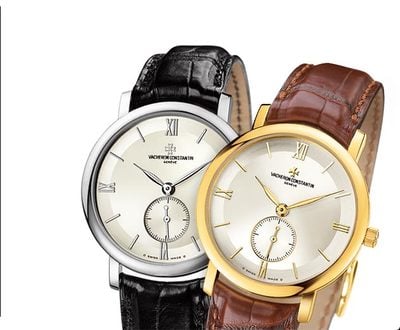
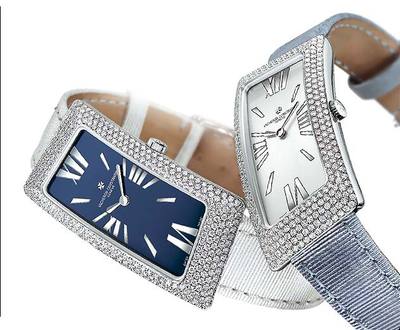
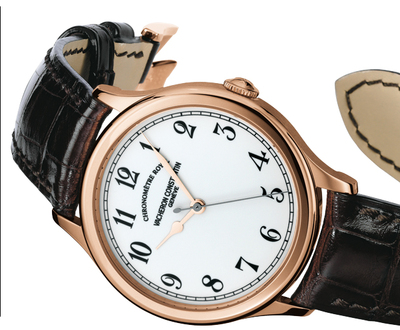
Vacheron Constantin collections


Latest News from Vacheron Constantin
Vacheron Constantin Métiers d’Art Year of the Rat





Vacheron Constantin is adding a new timepiece to The Legend of the Chinese Zodiac collection. The new model features a dial adorned with the sign of the rat, one of the 12 signs of the Chinese zodiac. Rat, a symbol of vitality and intelligence, will take over from the pig at the Chinese New Year, on January 20th 2020. To mark the occasion, Vacheron Constantin presents two new creations, created in twelve models each. Thanks to the expertise of the master engravers and enamellers, The Legend of the Chinese Zodiac Collection is giving a new in...
Vacheron Constantin Historiques Cornes de vache 1955 in Steel


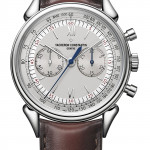


Vacheron Constantin revamps one of its historical watches, reference 6087, which is today one of the most sought-after models among watch collectors. The reference 6087, better known as Cornes de vache, or Cow horns, is the Maison’s first water-resistant chronograph launched in 1955. As part of its Historique Collection, the brand reissues Cornes the vache model in steel. Vacheron Constantin Historiques Cornes de vache 1955Reference 6087 The original Cornes de vache watch is one of the pieces most desired by collectors, due to its very limite...
Vacheron Constantin Traditionnelle Quartz Limited Edition for China
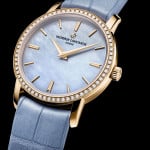
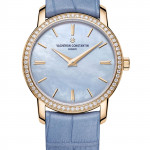



The oldest Swiss manufacture, Vacheron Constantin, has been in China for a very long time. Their first delivery of watches to China dates back to 1840’s. The Manufacture is known for its historical Chinese watches, that were heavily decorated and often available in pairs. Designed to withstand humid climates, they were both reliable and accurate. This year, the great Swiss watchmaker presents a limited edition Traditionnelle Quartz dedicated to the Chinese clientele. Vacheron Constantin’s Chinese clients are slightly younger than the global...
Overseas Dual Time Cory Richards Everest 2019 Prototype Watch





The house of Vacheron Constantin honors one of its ambassadors, the professional photographer and long-distance explorer Cory Richards, with an Overseas Dual Time prototype timepiece. The watch is dedicated to Richards’ third attempt to conquer the Earth’s highest mountain, Mount Everest (29.029 ft). Even though he had already conquered it twice, once without oxygen in 2016, this time he had to give up because of the bad weather conditions. However, he managed to take some extraordinary photos and videos, which will be exhibited in Vacheron...
Vacheron Constantin Les Cabinotiers Grand Complication Phoenix Pre-SIHH 2019
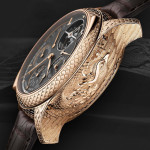




A one of a kind twin-dial model created by Vacheron Constantin’s Les Cabinotiers department is one of the new products which will be presented at SIHH 2019 in January. The brand has already revealed Les Cabinotiers Minute Repeater Tourbillon Sky Chart, and now it presents yet another unique model – Les Cabinotiers Grand Complication Phoenix. Both new models are specially commissioned bespoke timepieces intended for the brand’s most devoted clients and watch collectors. The Grand Complication Phoenix is a magnificent new model that combines n...
Vacheron Constantin Les Cabinotiers Minute Repeater Tourbillon Sky Chart - SIHH 2019
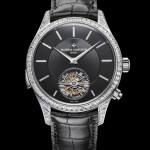




Ahead of the SIHH 2019 watch salon, taking place in January next year, the house of Vacheron Constantin introduces an extraordinary, one-of-a-kind model created by the watchmakers of the special Les Cabinotiers department. The department reconnects with the era when the highly specialized Geneva watchmakers worked in special ateliers where they crafted unique and specially commissioned complication watches – the cabinotiers. The latest creation of the modern Les Cabinotiers workshops is the unique Minute Repeater Tourbillon Sky Chart, a wat...
Vacheron Constantin Traditionnelle Bucherer Blue Editions





The legendary watch retailer, Bucherer, has since 1888 offered its customers timepieces crafted by some of the world’s best manufacturers. To celebrate the unique bond with its partners, Bucherer has launched the special Blue Editions project – an exclusive collection of blue-themed watches. Blue, the symbol of Bucherer, is now a common theme of all the new creations of the Bucherer blue editions. These exclusive models are only available at Bucherer boutiques, and they’re produced in a limited run. The latest to offer its interpretation of...
Vacheron Constantin Overseas Black





Vacheron Constantin’s legendary sports line Overseas welcomes a powerful new model with a new dial color. The very first Overseas model, combining the luxury, elegance, and sportiness, was introduced back in 1996. In 2006, on the occasion of the 10th anniversary of the first steel model, Vacheron Constantin revealed the Overseas in yellow gold, and later, in 2008, a version in rose gold. In 2016, to celebrate the 20th anniversary of its emblematic model, the Swiss manufacture revealed a modernized Overseas collection with a revisited design...
Vacheron Constantin Patrimony Self-Winding 36mm





One of Vacheron Constantin’s most iconic models, the simple yet elegant Patrimony, makes a notable new appearance in a 36 mm-diameter version, crafted from white gold. The minimalist new variant of the celebrated Patrimony model, with simplified highly refined design, is designed for both men and women. Vacheron Constantin Patrimony Self-Winding 36mm 4100U/000G-B181: black semi-mat leather strap Fitted with a leather strap in classic black or a vibant red, the Patrimony self-winding 36mm is equipped by a mechanical automatic movement designed...
Vacheron Constantin Les Cabinotiers Grande Complication “Ornementale” and "Crocodile" - SIHH 2018





For this year’s edition of the Salon International de la Haute Horlogerie (SIHH 2018), the house of Vacheron Constantin introduced two new masterpieces in its highly exclusive Les Cabinotiers collection. Same as the rest of the range, the two new models - Les Cabinotiers Grande Complication “Ornementale” and Les Cabinotiers Grande Complication “Crocodile” – are the work of the Maison’s special Les Cabinotiers Ateliers in which the watchmaking expertise meets artistic crafts to create unique models for most prestigious clients. Both of these...
